
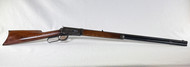
A Collector's Classic from the Golden Age: Winchester Model 1894 in .32-40 (Serial 298336, Circa 1903)
Dec 8th 2025

Few rifles represent the heritage of American gunmaking as gracefully as the Winchester Model 1894. Among the many chamberings and configurations produced during its long and storied run, the .32-40 Winchester octagon-barreled rifles from the early 1900s occupy a special place in the hearts of collectors. These rifles trace their lineage to a time when craftsmanship was personal, materials were premium, and every Winchester that left New Haven embodied the reputation of the brand.
The example discussed here—serial number 298336, manufactured circa 1903—is a classic configuration: 26-inch octagon barrel, 44-inch overall length, early blued finish, crescent steel buttplate, and a finely fitted walnut stock. This rifle stands as a testament to the aesthetics and engineering that made the Model 1894 the most iconic lever-action rifle ever produced.
The .32-40 Winchester: Accuracy and Tradition
Originally introduced in the late 1880s as a balloon-head blackpowder cartridge, the .32-40 Winchester quickly became a favorite among early 20th-century hunters and target shooters. Known for its superb accuracy, mild recoil, and consistent performance, the .32-40 was widely used in Schützen competitions, where precision mattered more than power.
While the cartridge would eventually be overshadowed by smokeless powder calibers, rifles chambered in .32-40—especially early 1894s like this one—remain highly desirable today for their blend of shootability, nostalgia, and mechanical quality.

The Octagon Barrel: Form Meets Function
The 26-inch octagon barrel is one of the most visually striking and mechanically respected configurations Winchester offered. Octagon barrels were more expensive to produce than round barrels, requiring additional machining and hand finishing. They offered:
-
Added rigidity, contributing to improved accuracy
-
A classic, unmistakable appearance
-
Better balance when shooting offhand
-
A premium aesthetic favored by discerning buyers of the era
Collectors today continue to prize octagon barrels for all the same reasons.

Winchester Craftsmanship in the Early 1900s
By 1903, the Model 1894 had been in production less than a decade, but it had already earned a reputation for reliability and fine workmanship. This period is widely considered the golden age of Winchester lever guns. Features characteristic of this era include:
-
Deep, high-quality Winchester bluing
-
Tight wood-to-metal fit using seasoned black walnut
-
Crisp action machining with clean internal tolerances
-
Graceful steel crescent buttplates typical of rifles intended for field use rather than saddle carry
Compared with later cost-saving production methods, early 1900s Winchesters display noticeably more hand fitting and finish—qualities that collectors readily recognize.

What Collectors Look for in a Rifle Like This
When evaluating a Winchester Model 1894 from this era, collectors typically focus on several key areas:
1. Original Finish
A rifle retaining a high percentage of its factory bluing is significantly more valuable. Even light wear is acceptable on a 120-year-old firearm, but signs of refinishing—polished lettering, dished screw holes, or bluing over pits—can drastically impact value.
2. Wood Condition
Collectors appreciate:
-
Unaltered walnut stocks
-
Original varnish or oil finish
-
Sharp edges around the wrist and forend
-
Matching color and grain between buttstock and forearm
Over-sanding or modern refinishing reduces desirability.
3. Mechanical Originality
A correct rifle should have:
-
Proper period sights
-
Matching internal components
-
No evidence of replaced screws or modern parts
Smooth cycling without excessive play is a welcome bonus.

4. Bore Quality
For a rifle of this age, a bright bore with strong rifling is a major plus, especially since .32-40 was originally a blackpowder load. Even “frosted but strong” is acceptable; deep pitting lowers collector interest.
5. Configuration Verification
Collectors verify the rifle’s configuration using:
-
Barrel shape and length
-
Buttplate style
-
Sights
-
Wood type
-
Caliber markings
Factory letters (from the Cody Firearms Museum) can help confirm originality, though not all records survive for this serial range.
6. Historical Wear—But No Abuse
Honest field wear is part of the rifle’s charm. Abuse, however—such as heavy corrosion, cracked stocks, or non-period modifications—detracts from the firearm’s authenticity and historical value.
A Rifle That Embodies Americana
The Winchester Model 1894 in .32-40 remains one of the most beloved examples of early American sporting rifles. With its octagon barrel, fine walnut stock, and turn-of-the-century craftsmanship, serial 298336 stands as more than a firearm—it is a tangible artifact from a time when rifles were built to last generations.
Collectors today value these rifles not only for their scarcity and beauty but also for what they represent: the golden era of Winchester design, American ingenuity, and the enduring appeal of the lever-action tradition.
