
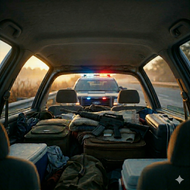
How do I legally transport firearms as I drive cross country?
Posted by EstateGunsAndAmmo.com on Mar 22nd 2026
Navigating the transport of firearms across state lines—especially when managing a complex estate collection—requires a careful balance of legal compliance and logistical planning. At EstateGunsAndAmmo.com, we want to ensure you have the best information to stay safe and legal on the road.
Important Legal Disclaimer: The information provided on this website, including this article, is for educational and informational purposes only and does not constitute legal advice. Firearm laws are subject to frequent change at federal, state, and local levels. While we strive to provide accurate information, EstateGunsAndAmmo.com makes no guarantees regarding the completeness or accuracy of this content.
By using this site, you acknowledge that EstateGunsAndAmmo.com, its owners, and affiliates are not liable for any legal issues, arrests, or penalties resulting from your interpretation or use of this information. We strongly recommend consulting with a qualified attorney or a licensed Federal Firearms Licensee (FFL) before transporting firearms. Transporting firearms involves inherent risks; proceed at your own legal and personal peril.
Road Trip Readiness: Moving Your Collection Safely
Moving an estate collection isn't just about packing a trunk; it's about understanding the federal "Safe Passage" law, which protects you if you are traveling from one place where you can legally have the gun to another where it is also legal.
Transporting firearms across state lines by vehicle is primarily governed by the Firearm Owners Protection Act (FOPA) of 1986, specifically the "Safe Passage" provision (18 U.S.C. § 926A). This federal law is designed to protect law-abiding gun owners as they travel through states with restrictive gun laws, provided they follow specific protocols.
(18 U.S.C. § 926A) "Notwithstanding any other provision of any law or any rule or regulation of a State or any political subdivision thereof, any person who is not otherwise prohibited by this chapter from transporting, shipping, or receiving a firearm shall be entitled to transport a firearm for any lawful purpose from any place where he may lawfully possess and carry such firearm to any other place where he may lawfully possess and carry such firearm if, during such transportation the firearm is unloaded, and neither the firearm nor any ammunition being transported is readily accessible or is directly accessible
from the passenger compartment of such transporting vehicle: Provided, That in the case of a vehicle without a compartment separate from the driver’s compartment the firearm or ammunition shall be contained in a locked cont ainer other than the glove compartment or console."
Below is the legal framework and a practical step-by-step guide for staying compliant in 2026.
1. The "Safe Passage" Criteria
To be protected by federal law
-
Legal at Both Ends: You must be legally allowed to possess the firearm in the state w
here your trip begins and the state where it ends. -
Continuous Travel: You must be "traveling" through intervening states. While short stops for gas, food, or emergencies are generally covered, extended stays (like staying in a hotel for several days) in a restrictive state may strip you of FOPA protection and subject you to that state's local laws.
-
Proper Storage: The firearm must be stored according to federal standards to ensure it is not "readily accessible." (The more steps it takes to reach the firearm and make it usable, the better.) Disassembling the firearm or adding gun locks while it is in the locked case can strengthen your "Safe Passage" scenario.
2. How to Secure Your Firearms for Transport
The federal standard for safe passage requires specific storage methods depending on your vehicle type:
| Storage Requirement | Standard Vehicle (Sedan) | SUV / Hatchback / Truck |
| Loaded Status | Completely Unloaded | Completely Unloaded |
| Location | Locked Trunk | Rear-most area away from the driver |
| Container | Trunk is sufficient, but a case is safer | Locked, hard-sided container |
| Accessibility | Not accessible from passenger cabin | Out of reach of all passengers |
-
The Family Sedan (With a Trunk): This is the gold standard for FOPA compliance. Keep the unloaded firearms in the trunk, ideally in locked cases. Store the ammunition in a separate container, also in the trunk.
-
The SUV or Hatchback (No Separate Trunk): Since you don't have a trunk, you must use a locked, hard-sided container. Place this case in the absolute rear of the vehicle, as far from the driver as possible. A glove box or center console never counts as a legal storage area under FOPA.
-
The Pickup Truck: If you have a locking toolbox in the bed, that is a great option. If storing inside the cab, use a locked case behind the seat.
-
The Motorcycle: Use a locked saddlebag or a locked case strapped to the luggage rack.
Important Restrictions:
-
Glove Box/Console: Under no circumstances does a glove box or center console count as a "locked container" under FOPA, even if it has a physical lock.
-
Ammunition: While FOPA does not strictly mandate separate containers for ammo, many legal experts and some state laws require ammunition to be stored in a separate locked box or at least in a different part of the vehicle from the firearm.
3. Special Requirements for NFA Items
If you are transporting items regulated by the National Firearms Act (such as Short-Barreled Rifles or Machine Guns), additional steps are required:
-
ATF Form 5320.20: You must file this form with the ATF and receive approval in writing before moving these items across state lines.
-
Exceptions: Suppressors (silencers) and AOWs (Any Other Weapons) generally do not require a 5320.20 for temporary interstate travel, but you must still ensure they are legal to possess in your destination state.
4. Practical Safety Tips for the Road
-
Carry Documentation: Keep copies of your bill of sale, any state carry permits, and (for NFA items) your approved tax stamps and Form 20s in a folder—but not inside the locked gun case.
-
Avoid "Gear Traps": FOPA protects the firearm and ammunition, but it may not protect accessories that are illegal in a "pass-through" state, such as high-capacity magazines or certain "assault weapon" attachments.
-
Traffic Stops: If pulled over, keep your hands on the steering wheel. If you are in a state that requires a "duty to inform," calmly notify the officer that you are legally transporting unloaded firearms in compliance with FOPA.
5. The "Pro" Option: Using an FFL for Shipping
If the thought of driving through restrictive corridors like the "Iron Pipeline" (I-95 through the Northeast) makes you nervous, there is a much simpler way: FFL-to-FFL shipping.
Pros:
-
Peace of Mind: You don't have to worry about local police interpretations of FOPA during a traffic stop.
-
Traceability: It creates a clear legal paper trail, which is vital for estate executors to prove they handled the assets correctly.
-
No NFA Headaches: Moving NFA items (like suppressors) across state lines requires approved ATF Form 20s. An FFL can often help manage these logistics or store items during probate.
-
Enhanced Security: No chance of losing your firearms to a vehicle burglary during a pit stop.
Cons:
-
4473 Form at Pickup: Even though you possessed the firearm before you dropped it at the shipping FFL, you will need to complete a background check when you pick it up at your destination.
-
Fees: There will most likely be a transfer fee at both ends of the shipping process (typically $25-$100 per location).
Final Thoughts
Whether you choose to pack up the car or rely on the expertise of a local FFL, taking the time to plan your route and understand the laws will give you invaluable peace of mind. Managing an estate collection is already a big job, so don't let transportation logistics add unnecessary stress to the process. If you have any questions or need guidance on the best way to handle your unique situation, reach out to us at EstateGunsAndAmmo.com. We're always here to help you navigate the journey safely and confidently. Safe travels!